
Loyalty
Loyalty
Loyalty Only Works When It’s Seen, Used, and Felt
Loyalty Only Works When It’s Seen, Used, and Felt
Loyalty Only Works When It’s Seen, Used, and Felt
How visible currency, easy redemption, and targeted rewards increase repeat visits and higher spend in restaurants.
How visible currency, easy redemption, and targeted rewards increase repeat visits and higher spend in restaurants.
Written by

Nomni
The ultimate hospo solution
In hospitality, loyalty has one job: bring customers back sooner and encourage them to spend more when they do. Vague points rarely achieve that. They do not clearly express value, require mental math, and reward past spending without shaping what happens next.
Effective restaurant loyalty programs need three things: clarity, ease of use, and relevance.
Currency achieves that. A $5 balance feels like $5. It is simple. Immediate. Easy to understand. Even a small balance creates a reason to return.
With Nomni, loyalty stays front and centre throughout the ordering journey. You can program and structure it to incentivise specific behaviours while keeping the experience effortless for customers and staff. Venues can sell and issue Nomni Rewards — a programmable, venue-specific currency that functions like real money and encourages diners to return and continue spending.
Nomni makes restaurant loyalty visible, frictionless, and easy to enrol in and use.
This blog outlines what effective restaurant loyalty looks like today and how visibility, simple redemption, and targeted rewards increase repeat visits and average spend.
Why Visibility Matters in Restaurant Loyalty Programs
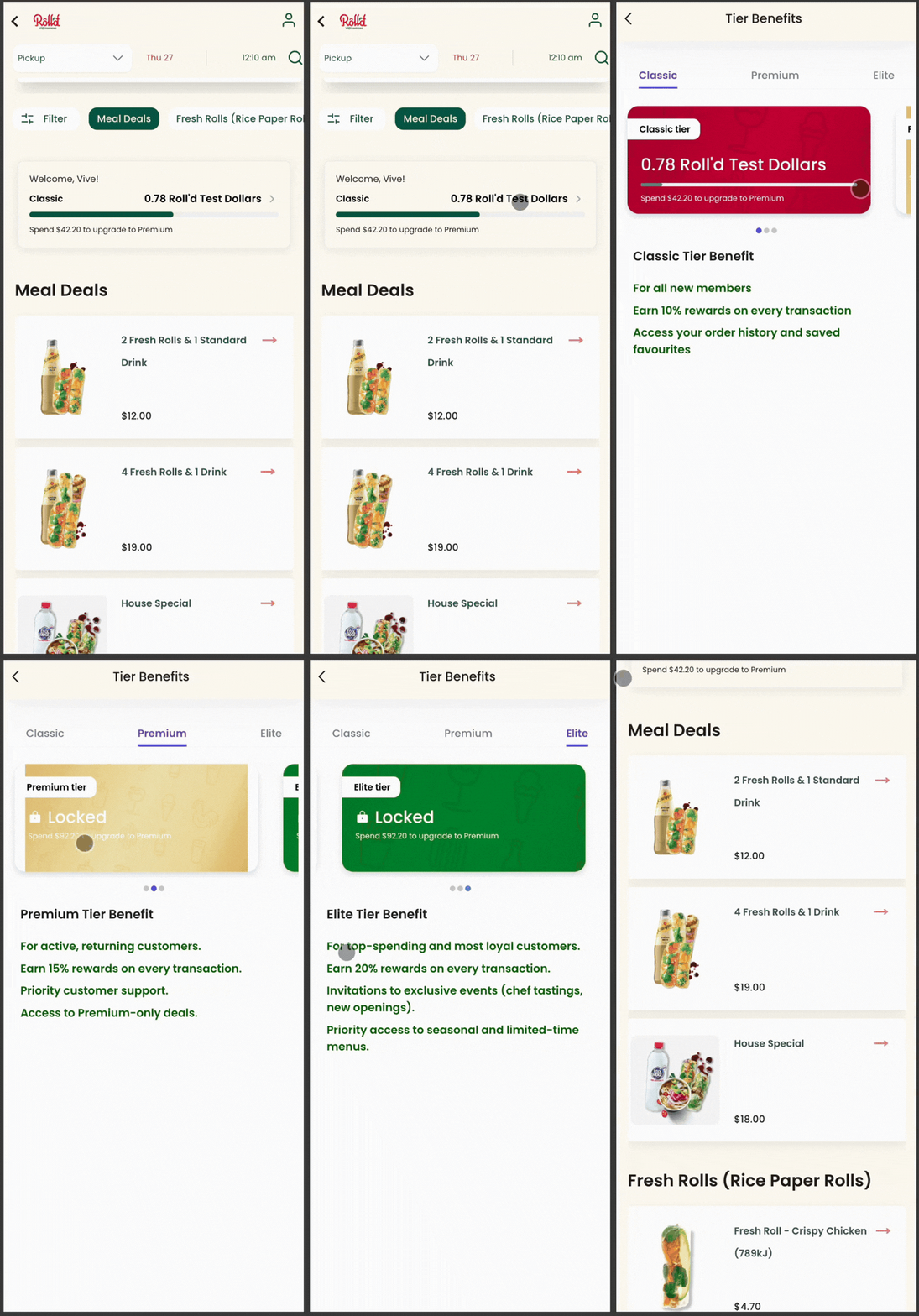
Loyalty works better when customers can see value building as they spend. If progress is hidden or redemption is complicated, motivation disappears.
Nomni Rewards make restaurant loyalty tangible.
Nomni Rewards are a venue’s own currency, earned as a percentage of every order and stored in a customer’s digital wallet. You can brand and name them as you want.
Traditional points systems work best in industries with high margins, high order values, and low purchase frequency. Airlines are the classic example. Hospitality is different.
Restaurants operate on tight margins, lower order values, and frequent visits. Loyalty in this environment needs to be simple, visible, and immediately valuable.
With Nomni Rewards enabled, every dollar a diner spends at your restaurant earns them a percentage back in your venue’s currency, which can be redeemed only at your venues.
When customers see real dollars sitting in their wallet, they have a clear reason to return. On redemption, customers typically spend more than they would under traditional points-based programs.
The Rewards wallet is visible on the home screen of the Nomni Magic App.
As soon as a customer logs in, they see their balance. With every transaction, they continue earning.
Loyalty tiers add structure to this behaviour. You can set membership levels based on spend. Each tier includes defined benefits and reward rates. Customers can see their current tier, their earn rate, and how close they are to the next level.
This adds a gamified layer to your loyalty program. Progress is tracked and displayed inside the Nomni Magic App.
Why Loyalty Should Be Built Into the Ordering Flow
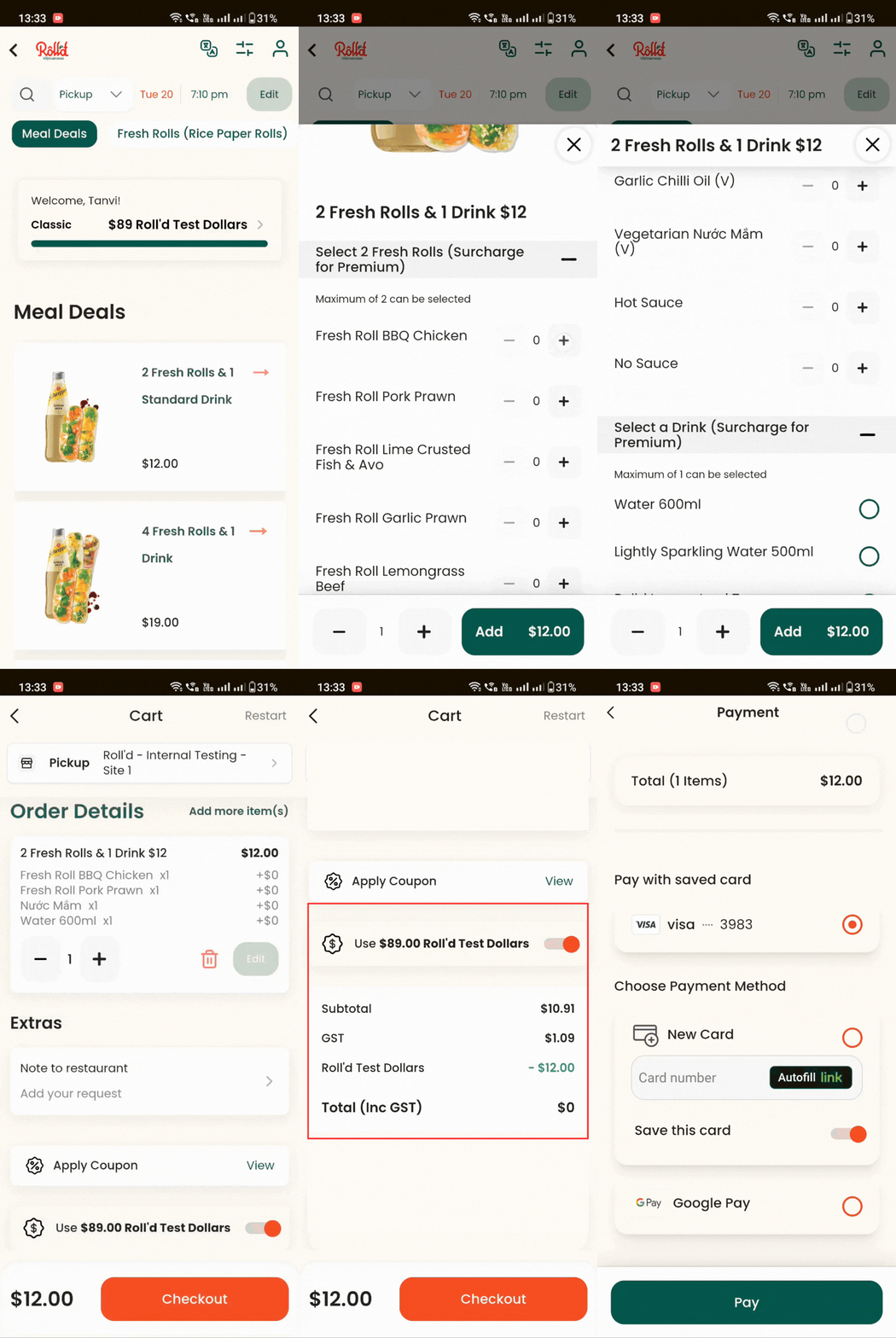
Visibility alone is not enough. Loyalty only works if customers can use it without effort. Otherwise, it becomes another points program that feels disconnected from the purchase.
Nomni enables a native earn-and-burn flow for Rewards directly within your restaurant ordering app.
The first touchpoint is the Reward balance displayed on the home screen.
Customers place their orders as usual. At checkout, Reward redemption is toggled on by default. Diners can redeem their available balance and pay any remaining amount using their preferred payment method. If they prefer to save their balance, they can toggle it off and pay the full amount.
At checkout, diners also see the Rewards amount they are earning from that transaction.
Once payment is completed, the amount is automatically credited to their digital wallet, ready for their next visit.
The experience is simple and built into the transaction flow.
How Loyalty Can Shape Customer Behaviour

Blanket rewards work for broad discounts or general incentives. But they rarely change behaviour.
Points-based programs often fail to influence behaviour in hospitality because the value feels distant and abstract rather than immediate.
If you want to direct customer behaviour in your restaurant, rewards need to be tied to specific actions.
These actions can include spending above a certain threshold, ordering a particular menu item, returning after a long period of inactivity, or reaching a new loyalty tier.
For example, you can reward customers for ordering delivery directly through your own channels instead of a marketplace. Each loyalty-driven order then protects margin and keeps customer data within your ecosystem.
Targeted promotions make this possible. Instead of rewarding everyone, you reward defined behaviours.
Offers are triggered by measurable signals such as spend level, inactivity, loyalty tier, time of visit, or store location.
This changes how loyalty feels. A lapsed customer receives a timely reason to return. A regular customer feels recognised rather than discounted. A high-value diner sees benefits increase as their status grows.
For operators, this restores control. You decide who receives rewards and for what reason.
When loyalty is intentional, customers respond. Behaviour shifts. Loyalty moves from passive discounting to active demand shaping.
Frequently Asked Questions About Restaurant Loyalty
What makes a restaurant loyalty program effective?
An effective restaurant loyalty program makes rewards visible, easy to redeem, and relevant to customer behaviour. Diners should see value building as they spend, use rewards at checkout without friction, and feel motivated to return sooner.
Why don’t points-based loyalty programs work well in hospitality?
Points often feel abstract and require mental conversion. In hospitality, where visits are frequent and margins are tight, customers respond better to tangible, currency-based rewards that feel immediate and easy to use.
What is currency-based loyalty in restaurants?
Currency-based loyalty rewards customers with a dollar-value balance they can see and spend. Instead of collecting abstract points, diners earn venue-specific digital currency that feels like real money and encourages repeat visits.
How can loyalty programs increase repeat visits and spend?
Loyalty increases repeat visits and spend when rewards are visible during ordering, easy to redeem at checkout, and targeted to influence specific behaviours such as higher spend, return visits, or direct ordering.
In hospitality, loyalty has one job: bring customers back sooner and encourage them to spend more when they do. Vague points rarely achieve that. They do not clearly express value, require mental math, and reward past spending without shaping what happens next.
Effective restaurant loyalty programs need three things: clarity, ease of use, and relevance.
Currency achieves that. A $5 balance feels like $5. It is simple. Immediate. Easy to understand. Even a small balance creates a reason to return.
With Nomni, loyalty stays front and centre throughout the ordering journey. You can program and structure it to incentivise specific behaviours while keeping the experience effortless for customers and staff. Venues can sell and issue Nomni Rewards — a programmable, venue-specific currency that functions like real money and encourages diners to return and continue spending.
Nomni makes restaurant loyalty visible, frictionless, and easy to enrol in and use.
This blog outlines what effective restaurant loyalty looks like today and how visibility, simple redemption, and targeted rewards increase repeat visits and average spend.
Why Visibility Matters in Restaurant Loyalty Programs
Loyalty works better when customers can see value building as they spend. If progress is hidden or redemption is complicated, motivation disappears.
Nomni Rewards make restaurant loyalty tangible.
Nomni Rewards are a venue’s own currency, earned as a percentage of every order and stored in a customer’s digital wallet. You can brand and name them as you want.
Traditional points systems work best in industries with high margins, high order values, and low purchase frequency. Airlines are the classic example. Hospitality is different.
Restaurants operate on tight margins, lower order values, and frequent visits. Loyalty in this environment needs to be simple, visible, and immediately valuable.
With Nomni Rewards enabled, every dollar a diner spends at your restaurant earns them a percentage back in your venue’s currency, which can be redeemed only at your venues.
When customers see real dollars sitting in their wallet, they have a clear reason to return. On redemption, customers typically spend more than they would under traditional points-based programs.
The Rewards wallet is visible on the home screen of the Nomni Magic App.
As soon as a customer logs in, they see their balance. With every transaction, they continue earning.
Loyalty tiers add structure to this behaviour. You can set membership levels based on spend. Each tier includes defined benefits and reward rates. Customers can see their current tier, their earn rate, and how close they are to the next level.
This adds a gamified layer to your loyalty program. Progress is tracked and displayed inside the Nomni Magic App.
Why Loyalty Should Be Built Into the Ordering Flow
Visibility alone is not enough. Loyalty only works if customers can use it without effort. Otherwise, it becomes another points program that feels disconnected from the purchase.
Nomni enables a native earn-and-burn flow for Rewards directly within your restaurant ordering app.
The first touchpoint is the Reward balance displayed on the home screen.
Customers place their orders as usual. At checkout, Reward redemption is toggled on by default. Diners can redeem their available balance and pay any remaining amount using their preferred payment method. If they prefer to save their balance, they can toggle it off and pay the full amount.
At checkout, diners also see the Rewards amount they are earning from that transaction.
Once payment is completed, the amount is automatically credited to their digital wallet, ready for their next visit.
The experience is simple and built into the transaction flow.
How Loyalty Can Shape Customer Behaviour
Blanket rewards work for broad discounts or general incentives. But they rarely change behaviour.
Points-based programs often fail to influence behaviour in hospitality because the value feels distant and abstract rather than immediate.
If you want to direct customer behaviour in your restaurant, rewards need to be tied to specific actions.
These actions can include spending above a certain threshold, ordering a particular menu item, returning after a long period of inactivity, or reaching a new loyalty tier.
For example, you can reward customers for ordering delivery directly through your own channels instead of a marketplace. Each loyalty-driven order then protects margin and keeps customer data within your ecosystem.
Targeted promotions make this possible. Instead of rewarding everyone, you reward defined behaviours.
Offers are triggered by measurable signals such as spend level, inactivity, loyalty tier, time of visit, or store location.
This changes how loyalty feels. A lapsed customer receives a timely reason to return. A regular customer feels recognised rather than discounted. A high-value diner sees benefits increase as their status grows.
For operators, this restores control. You decide who receives rewards and for what reason.
When loyalty is intentional, customers respond. Behaviour shifts. Loyalty moves from passive discounting to active demand shaping.
Frequently Asked Questions About Restaurant Loyalty
What makes a restaurant loyalty program effective?
An effective restaurant loyalty program makes rewards visible, easy to redeem, and relevant to customer behaviour. Diners should see value building as they spend, use rewards at checkout without friction, and feel motivated to return sooner.
Why don’t points-based loyalty programs work well in hospitality?
Points often feel abstract and require mental conversion. In hospitality, where visits are frequent and margins are tight, customers respond better to tangible, currency-based rewards that feel immediate and easy to use.
What is currency-based loyalty in restaurants?
Currency-based loyalty rewards customers with a dollar-value balance they can see and spend. Instead of collecting abstract points, diners earn venue-specific digital currency that feels like real money and encourages repeat visits.
How can loyalty programs increase repeat visits and spend?
Loyalty increases repeat visits and spend when rewards are visible during ordering, easy to redeem at checkout, and targeted to influence specific behaviours such as higher spend, return visits, or direct ordering.
Nomni is the first complete hospitality system that works for you. Loved by over 35,000 venues across Asia Pacific and used by tens of millions of diners and operators annually. To see how Nomni can work for you, visit Nomni.ai
Nomni is the first complete hospitality system that works for you. Loved by over 35,000 venues across Asia Pacific and used by tens of millions of diners and operators annually. To see how Nomni can work for you, visit Nomni.ai
Share this post
Share this post
You might also like
You might also like
You might also like


Browse by category
Browse by category

SUBSCRIBE FOR FREE
Get proven ideas to boost covers, spend and repeat visits.
SUBSCRIBE FOR FREE
Get proven ideas to boost covers, spend and repeat visits.
SUBSCRIBE FOR FREE
Get proven ideas to boost covers, spend and repeat visits.
SUBSCRIBE FOR FREE
Get proven ideas to boost covers, spend and repeat visits.
MAGIC APPS
VENUES
RESOURCES
MAGIC APPS
VENUES
RESOURCES
MAGIC APPS
VENUES
RESOURCES
Welcome to Nomni, a new day for hospitality, take back control. Learn more here.

Welcome to Nomni, a new day for hospitality, take back control. Learn more here.
Welcome to Nomni, a new day for hospitality, take back control. Learn more here.
Welcome to Nomni, a new day for hospitality, take back control. Learn more here.