Written by

Nomni
The ultimate hospo solution
Loyalty tiers work because they turn a rewards program into a game with visible progress. On Nomni, a guest starts on a base tier like Classic and moves up to levels like Explorer, Premium, and Super Fan as they spend more, unlocking a stronger reward rate and better perks at each step. That structure, not just the discount, is what keeps guests coming back.
Why tiers work better than flat points
A flat points program tells guests, “Spend money and get a reward later.” A tiered program gives them something more motivating: a clear sense that they are moving toward something better.
Loyalty tiers are simple levels that guests can progress through based on how much they spend. Each level can offer different rewards, benefits or earn rates, so diners can see that the more they engage with a venue, the more value they can receive in return.
When diners log in as a member, they can see their current tier straight away. By clicking on their member card, they can also see the offers they are eligible for now, as well as the rewards and benefits they can work toward by spending more with the venue.
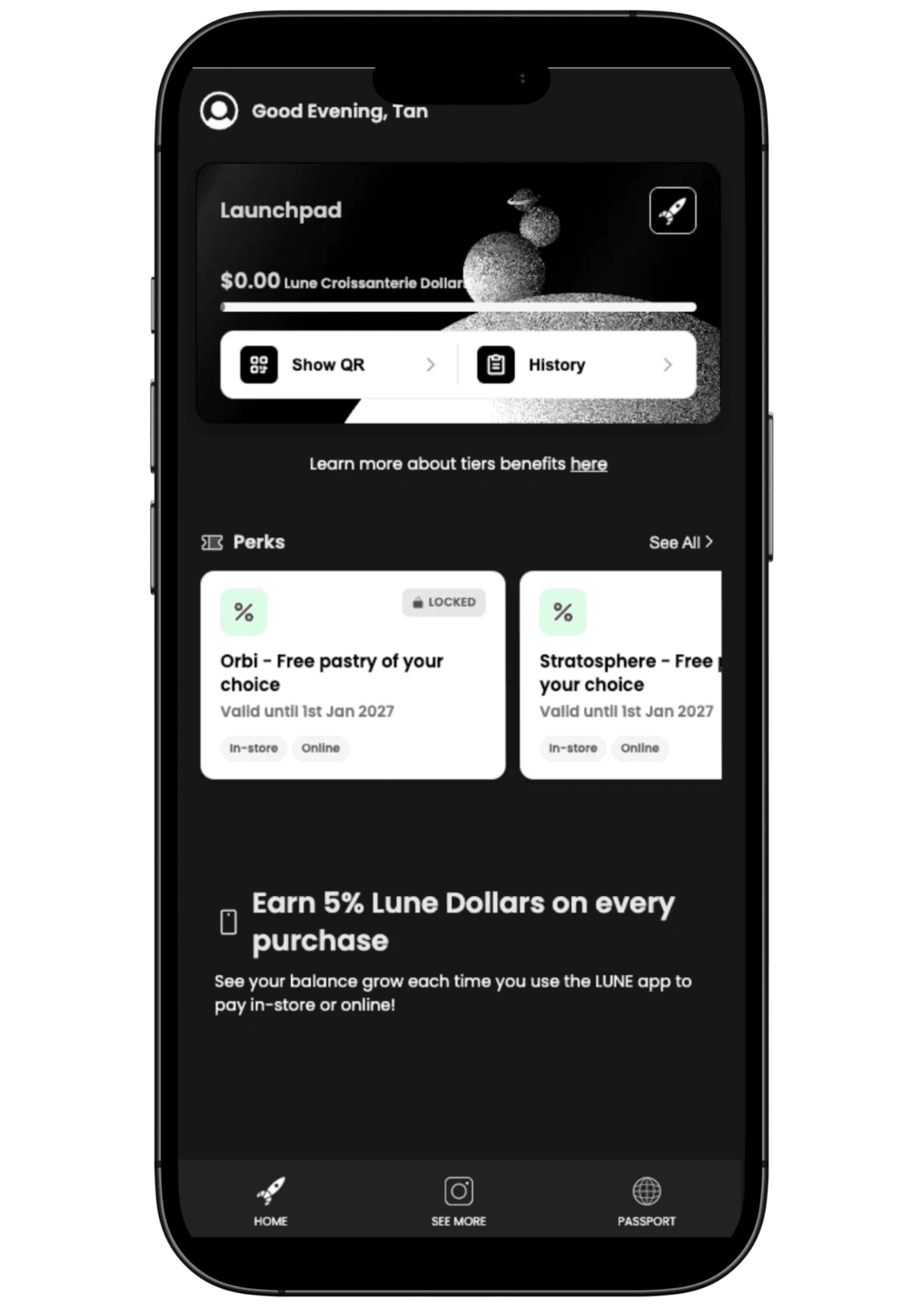
Each tier can be set up with its own reward rate and perks. For example, a guest in the Explorer tier may earn more venue dollars than a guest in Classic, while Premium and Super Fan guests may earn even more. The tier names, spend thresholds and rewards are fully customisable, so each venue can build a loyalty ladder that suits its brand, customers and business goals.
Behavioural research on gamification shows that levels, badges, and progress bars trigger the same achievement and recognition wiring that keeps people engaged with games. Every time a guest moves up a tier, that shows up as a visibly better reward rate, not just a one-off discount.
With Nomni’s rolling evaluation window, guests can see their tier progress update in real time, so they always know how close they are to earning their next reward or benefit. Because tiers are based on spend, every purchase counts, even a small first order. Keeping the first tier easy to reach gives diners an early sense of progress and encourages them to keep coming back.
Status is the real reward
People don't just want a discount. They want to feel like a regular, and they want other people to know it. A tier name does that job. When a guest is sitting at "Super Fan" instead of "Classic," the value isn't only the better reward rate attached to it. It's the recognition. Staff who know their order, a seat that's basically theirs on a Friday night, a status that says they belong at this venue more than most people walking in off the street. That's social currency, and it works.
Nomni lets venues lean into that directly. On top of the standard tier ladder, venues can layer VIP only bonuses, time-based boosts like double rewards on a slow Tuesday afternoon, and spend-based bonuses for bigger orders. A regular becomes a "Super Fan," not just someone with a stamp card.
The commercial case
Tiered loyalty programs are consistently linked to higher spend, more frequent visits, and better retention than flat, points-only programs. Restaurant loyalty visits have climbed noticeably since 2019, and tier-based recognition is a big part of why.
The catch
Tiers only work if every level feels reachable, not just the base one. Sweetgreen is the cautionary tale here. In 2025, it moved away from a tiered subscription model toward a simpler points-based program after customers found the tiers too confusing. The lesson isn't that tiers don't work. It's that complicated tiers don't.
This is where automatic upgrades matter. On Nomni, guests move up a tier the moment they cross a spend threshold, with no manual work for staff and no confusion for the guest about where they stand.
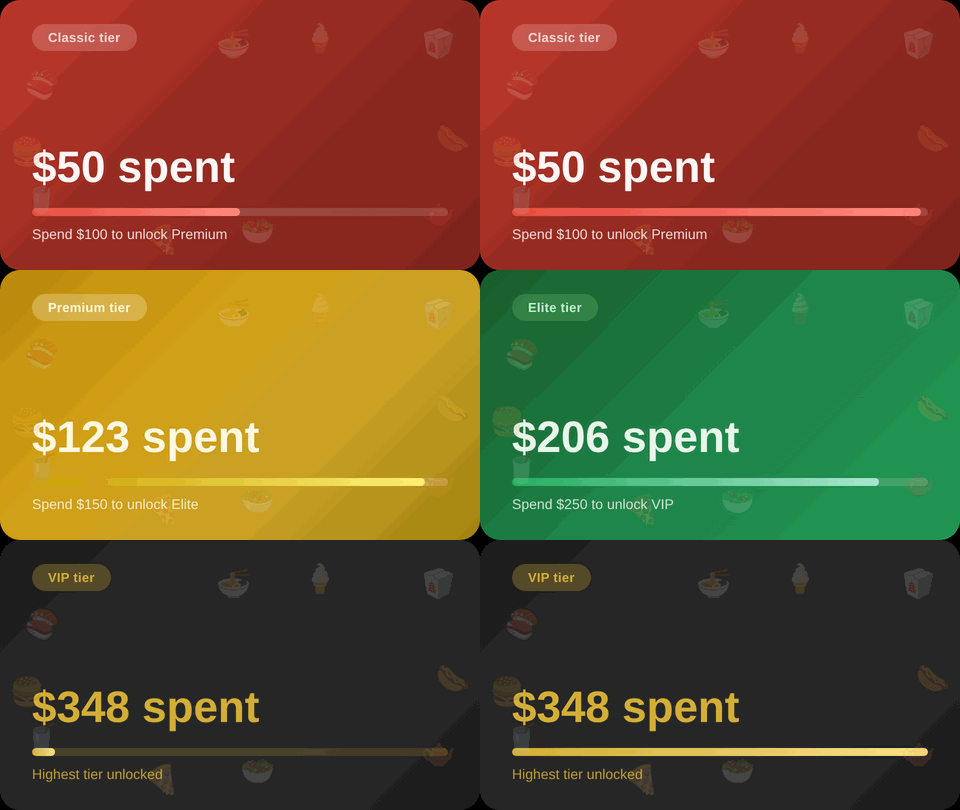
Instant recognition makes the experience feel more rewarding. When a guest has to wait for a venue to manually review their spend and apply an upgrade, the reward can feel disconnected from the purchase that earned it. But when the upgrade happens straight away at the point of sale or the next time they log in, the guest feels the benefit while the moment is still fresh. That is what makes tiers feel like progress, rather than process.
Automatic upgrades also help protect the guest experience as the program grows. Manual reviews can create delays, inconsistencies, or situations where a guest has earned Premium status but is still treated like Classic on their next visit. Automation removes that gap, so guests are recognised at the right level, at the right time.
The same approach works in reverse. Nomni’s tiers are based on a rolling evaluation window, which means guests keep their status as long as they continue spending at that level. If their spend drops over time, they move back down automatically.
That is not about punishing the guest. It is what keeps the higher tiers meaningful. If status never changed, Super Fan would simply become a badge someone earned in the past, rather than a reflection of their relationship with the venue today. Automatic re-qualification keeps the incentive active throughout the year, instead of becoming a one-time milestone guests reach once and then forget.
The takeaway
Tiers are more than a perk. They tap into how guests think, feel and behave. When they are simple to understand, easy to track and tied to rewards guests genuinely value, tiers give people a reason to keep coming back. Over time, they can turn regular diners into loyal fans, and loyal fans into one of a venue’s strongest sources of repeat revenue.